
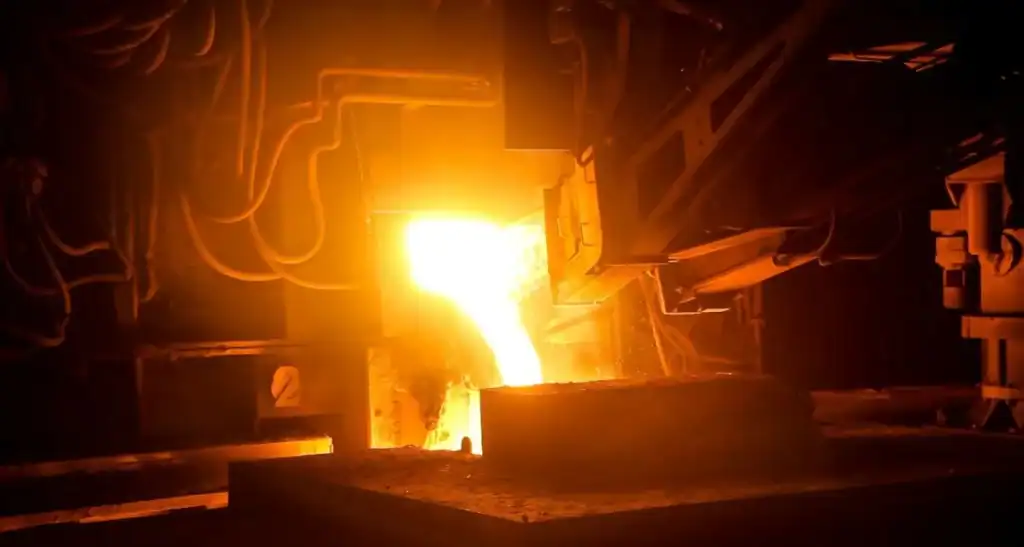
Steel shot may look simple from the outside – just small, spherical metallic balls. But inside each shot, the microstructure created by heat treatment decides how it behaves in your blasting line: how aggressively it cleans, how long it lasts, how much dust it generates, and how stable your surface profile is from shift to shift. Understanding heat treatment is therefore not just a metallurgical exercise; it is a very practical lever for controlling blasting cost and quality.
The heat treatment of steel shot is a controlled process of heating, quenching, and tempering that adjusts hardness and microstructure. Properly heat-treated steel shot combines enough hardness to clean efficiently with enough toughness to resist breaking, which reduces dust, stabilizes roughness (Ra/Rz), and lowers the true cost per blasted square meter.
If you only needed a quick definition, you already know the basics: heat treatment balances hardness and toughness. But if you’re responsible for a shot blasting or shot peening line, you also need to understand what actually happens inside the furnace, what hardness ranges fit which applications, how microstructure links to dust and media life, and how to judge whether your supplier’s heat treatment is truly under control.
In this guide, we claim that a well-designed and well-controlled heat treatment process can cut the real blasting cost by extending media life, reducing breakdown and dust, and stabilizing surface quality—often without changing your machine or cycle time.
Table of Contents
Why Does Heat Treatment Matter for Steel Shot Performance?
In blasting operations, many people focus on the machine: wheel power, number of turbines, nozzle type, and media flow rate. However, the “engine” of the process is actually the steel shot itself. Two shots with the same size and chemical composition can behave very differently if they have different hardness and microstructure — the direct result of heat treatment.
Heat treatment matters because it sets the hardness and internal structure of steel shot, which directly control cleaning speed, media life, dust generation, and surface profile consistency. A small difference in heat treatment can translate into a large difference in total blasting cost.
Without proper heat treatment, steel shot can be either too hard and brittle or too soft and deformable. Over-hard, brittle shot shatters quickly, creating excessive dust and fine particles that overload filters and reduce impact energy at the workpiece. Over-soft shot flattens and loses its sharp kinetic effect, so you need longer cycle times or higher media flow to achieve the same cleanliness or roughness. Well-balanced heat treatment aims for a hardness window where the shot is hard enough to remove scale and coatings efficiently, but still tough enough to survive thousands of impacts without cracking.
When hardness and toughness are correctly balanced by heat treatment, steel shot becomes a stable, predictable tool, not a random variable in your blasting line.
What Happens to Steel Shot During Heat Treatment?
To control the behavior of steel shot, manufacturers use a sequence of heating and cooling steps. Although the exact recipes vary, most high-carbon steel shot follows a similar path: austenitizing, quenching, and tempering.
During heat treatment, steel shot is heated to form austenite, rapidly cooled (quenched) to create a hard structure, and then reheated (tempered) to adjust hardness and relieve internal stress. Each step changes the internal microstructure and therefore the performance of the shot in blasting.
- Austenitizing. The shot is heated to a high temperature (above the austenitizing point) where the steel’s crystal structure becomes austenite. At this point, carbides dissolve and the structure is homogeneous. Temperature uniformity and holding time are critical; uneven austenitizing leads to non-uniform properties later.
- Quenching. The hot shot is then cooled rapidly, typically in a controlled air or water-based medium. This fast cooling transforms austenite into a hard structure (often martensite or lower bainite). Quench rate, medium, and agitation determine how much residual stress and distortion the shot will carry.
- Tempering. The quenched shot is still very hard but brittle. Tempering reheats it to a lower temperature for a controlled time. Internal stresses are relieved, toughness is improved, and hardness is adjusted into the target range specified by standards such as SAE J444 or ISO 11124.
Throughout these steps, manufacturers also control atmosphere, furnace loading, and continuous monitoring to ensure consistent results from batch to batch.
Proper control of the austenitize–quench–temper sequence is what turns raw cast granules into reliable, long-life steel shot suitable for demanding industrial blasting lines.
How Do Hardness Ranges Match Different Applications?
Not all blasting jobs are the same. A foundry cleaning heavy castings, a structural steel line preparing beams for coating, and a shot peening cell strengthening springs all need steel shot with different behavior. This is why manufacturers produce shot in defined hardness ranges.
Different hardness ranges of steel shot are optimized for different applications: medium-hard shot for general cleaning and scale removal, higher hardness for tough mill scale or strong profiles, and carefully controlled ranges for shot peening where excessive brittleness is unacceptable.
Typical hardness ranges (exact values depend on the standard and supplier) can be summarized conceptually as:
- Medium hardness shot often used for general descaling, derusting, and surface preparation before painting or coating. It offers a balanced profile and good media life, making it a common choice in structural steel lines and foundries.
- Higher hardness shot chosen when heavy, strongly adherent scale or coatings must be removed quickly, or where a more aggressive profile is required. The trade-off is usually a shorter media life and potentially higher dust, so process control becomes more important.
- Controlled hardness for shot peening. In peening, the goal is not cleaning but introducing compressive residual stress. The shot must be hard enough to plastically deform the surface, yet tough enough to avoid excessive fragmentation. Standards often specify narrower hardness windows to guarantee repeatable peening intensity (Almen intensity).
For buyers, the key is to match hardness not only to the workpiece material but also to machine type, desired roughness, and acceptable dust level.
Selecting the right hardness range, not simply “the hardest media possible”, is essential to balancing cleaning speed, surface quality, and media consumption.
How Does Microstructure Influence Durability and Dust?
Hardness is easy to understand because it can be measured quickly with HRC or HV. Microstructure sounds more abstract, but it is the hidden factor that explains why two shots with the same hardness can have completely different lifetimes and dust behavior.
Steel shot with a fine, uniform tempered microstructure is tougher and more resistant to crack initiation and propagation, so it survives more impacts and creates less dust. In contrast, coarse or heterogeneous structures with retained austenite, carbides, or shrinkage defects tend to break down quickly.
A properly heat-treated high-carbon steel shot typically exhibits a fine, tempered structure, often tempered martensite or bainite, with evenly distributed carbides. This structure combines high hardness with good toughness. When such a shot hits a workpiece at high velocity, elastic and plastic deformation are absorbed without catastrophic cracking.
If the microstructure is coarse, segregated, or contains high levels of retained austenite or brittle phases, each impact becomes a potential crack starter. Over time, cracks grow and the shot fractures into smaller particles. These fines carry less kinetic energy, contribute to dust, and clog the blasting system’s classification and filtration stages.
Therefore, microscopic features that most buyers never see—the grain size, carbide distribution, internal porosity—directly influence how frequently you must top up media and how often you must clean or replace filters and wear parts.
When you buy steel shot with a fine, homogeneous tempered microstructure, you are effectively buying longer media life, lower dust, and a more stable blasting process—even if the nominal hardness value looks similar on paper.
What Problems Come from Poor Heat Treatment of Steel Shot?
From the outside, poorly heat-treated shot may look acceptable, especially when new. The problems reveal themselves in operation: unstable results, rising costs, and unexpected maintenance issues.
Poor heat treatment leads to excessive shot breakdown, high dust load, inconsistent surface roughness, and accelerated wear of turbines, nozzles, and separators. These issues increase operating cost and make process control difficult.
Common symptoms of inadequate heat treatment include:
- High consumption rate: You need to add fresh shot frequently to maintain operating mix because particles fracture quickly.
- Dust and fines overload: Filters and cyclones struggle, ΔP across filters increases, and housekeeping becomes a constant problem.
- Inconsistent profile and cleanliness: As the mix shifts toward fines and deformed particles, impact energy at the workpiece decreases, leading to varying Sa grades or Ra values across different batches.
- Increased wear on machine components: Irregular, angular fragments strike turbines, blades, and liners in a more erosive way than spherical shot, shortening service life.
- Difficulty in meeting standards: For shot peening applications, poor heat treatment makes it hard to maintain a stable Almen intensity and pass periodic audits.
These costs are usually higher than the small price difference between low-quality and high-quality steel shot.
If you notice rising dust, unstable finish, and frequent media additions, it is often a sign that the heat treatment and microstructure of your steel shot are not under proper control—not just a “normal” cost of blasting.
How Should You Evaluate a Supplier’s Heat Treatment Capability?
Because you cannot see microstructure with the naked eye, evaluating a supplier’s heat treatment can be challenging. However, there are practical questions and documents you can request to reduce risk and identify truly professional manufacturers.
To judge a supplier’s heat treatment capability, ask about their furnace equipment, process control, hardness and microstructure testing, and compliance with standards such as SAE and ISO. Serious manufacturers provide documented procedures, test reports, and consistent batch certificates.
When auditing or selecting a supplier, consider:
- Equipment. Do they use continuous or batch furnaces with precise temperature control and automatic recording? Is quenching medium and agitation controlled and documented?
- Process documentation. Are there written heat treatment procedures for different shot sizes and hardness grades? Are furnace charts stored and traceable to each batch?
- Testing. Do they routinely test hardness across samples from each batch, and is it within the specified range? Do they perform metallographic examinations to check microstructure and detect defects?
- Standards and certifications. Are the products manufactured in accordance with relevant SAE/ISO standards, and is the plant certified (for example, under ISO 9001 or similar quality systems)?
- Traceability and batch certificates. Can they provide a test certificate (including hardness, density, microstructure description, and sometimes sieve analysis) for every shipment?
As a buyer, you don’t need to be a metallurgist, but you should be able to recognize whether a supplier treats heat treatment as a critical, controlled process or a black box.
Choosing a supplier with proven, documented heat treatment control is one of the most effective ways to stabilize your blasting process without changing your equipment.
How Does Optimized Heat Treatment Lower Your Total Blasting Cost?
At first glance, steel shot is a small part of your overall budget. This is why many companies focus only on price per ton. But when you analyze cost per blasted square meter, the picture changes dramatically, and heat treatment becomes highly visible in the numbers.
Optimized heat treatment lowers total blasting cost by extending media life, maintaining a stable operating mix, reducing dust and maintenance, and allowing shorter cycle times or lower media flow for the same surface result.
Well-balanced hardness and microstructure mean that each shot particle survives more impact cycles before it becomes a fine. That directly reduces kg of media consumed per m² of blasted area. Fewer fines also mean less dust load on filters, lower ΔP, and longer filter life.
Because the operating mix remains more stable, the process achieves target Sa cleanliness and roughness more consistently, which minimizes rework and over-blasting. In some cases, plants can reduce cycle time or media flow rate without sacrificing quality. Finally, reduced fragmentation leads to smoother interaction between media and machine parts, extending the lifespan of turbines, nozzles, and liners.
When all these savings are added up, the slightly higher price of high-quality, properly heat-treated shot is often offset quickly, and then continues to generate savings over the lifetime of the machine.
From a total cost of ownership (TCO) viewpoint, paying attention to heat treatment is one of the most profitable “small decisions” you can make in a blasting operation.
Conclusion
Proper heat treatment transforms steel shot from a simple commodity into a precisely engineered tool. By controlling hardness and microstructure, manufacturers can tune the behavior of the shot to match your application—whether you are cleaning heavy castings, preparing structural steel for coating, or performing certified shot peening on critical components.
For engineers and buyers, the key takeaway is simple: ask deeper questions about heat treatment. Don’t stop at size and price. Look for defined hardness ranges, documented furnace control, regular hardness and microstructure testing, and traceable batch certificates. When you choose a supplier who treats heat treatment as a core competence, you gain more than just media. You gain stability, predictability, and lower cost per blasted square meter.
If you are reviewing your current steel shot performance or planning a new blasting line and would like to discuss hardness ranges, microstructure, or test data in more detail, you are welcome to contact our technical team. We can analyze your existing media, recommend suitable hardness grades, and provide heat-treatment-controlled steel shot samples for on-site trials.